About half a decade ago, I opted to convert my failed music-and-musings blog into something more ambitious. After the promising run in the late 1990s of the Cloud-Zero mailing list and corresponding Brainwashed website, the internet felt like it was missing a definitive reference site for both old fans and neophytes of the Legendary Pink Dots who wanted to explore the band's immense and unwieldy catalog, or maybe to simply revel in the vast experimental, electronic, and psychedelic soundscapes that the band have been creating for 35 years. My work at the time developed into 9 separate entries, all extensively analyzing the music and the history of the Dots' early output from 1981-83. But these seeds for an oeuvreblog dedicated to one of my favorite bands, who I felt were underrepresented by the mainstream press and on the verge of being forgotten, eventually fell by the wayside as so many of my ambitious projects do, and the Legendary Pink Blog was therefore never fully realized.
Despite this, the band has been as prolific as ever, and to complicate matters infinitely, they launched their own Bandcamp site in 2012 and began releasing definitive remasters and exclusive releases—both new and archival—at a staggering rate. In a matter of a few short months, my project became outdated, and languished untouched for several years.
I've decided to rectify this by updating my old entries and possibly creating new ones. It starts here, with an album I’ve bought three times to date.
Ancient Daze
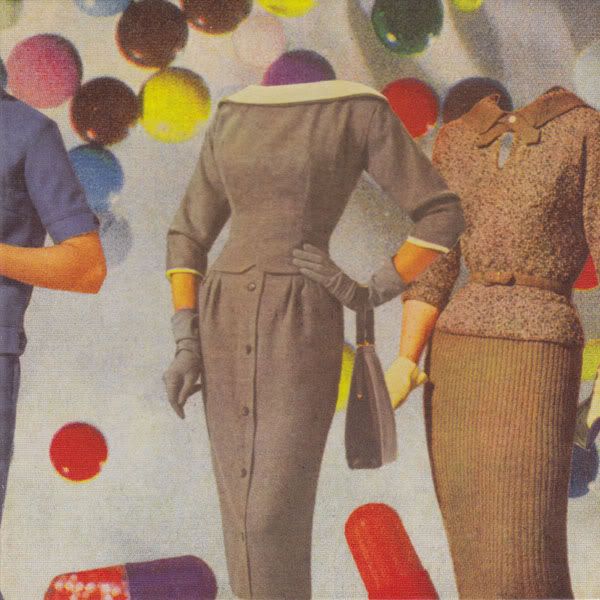
Front cover of 2006 CD edition
* These tracks appear on the 1981 cassette, Only Dreaming
** These tracks appear on the 1981 double cassette, Chemical Playschool Volumes 1 & 2
# This was previously unreleased until the 1997 CDr, Ancient Daze
† These were previously unreleased until the 2006 CD, Ancient Daze
For all practical purposes, this is the material that best represents the band’s very first release, a cassette-only thing called Only Dreaming from 1981. The original cassette sequence does not exist intact in digital format but can be recreated using most of this CD and a few stray tracks from others. I actually knew Only Dreaming first, due to an illicit copy that was bootlegged and “remastered” by a friend of mine (who didn’t like the Dots) for another friend of mine (who did, and who turned me onto the band). Of course, it’s hard to imagine anyone getting into the band based solely on this material, but for fans already in the know, it was certainly intriguing... but I digress.
A couple of years into my fandom (around 1997) the bulk of Only Dreaming was cleaned up, burned to CDr, and sold via mail order as Ancient Daze by the Dots themselves to crazy fans like me, who sent a money order to the Netherlands for two copies (one for me, one for aforementioned friend) but didn’t consider the exchange rate and ended up stiffing the band a few bucks. They still sent the order, god bless them.
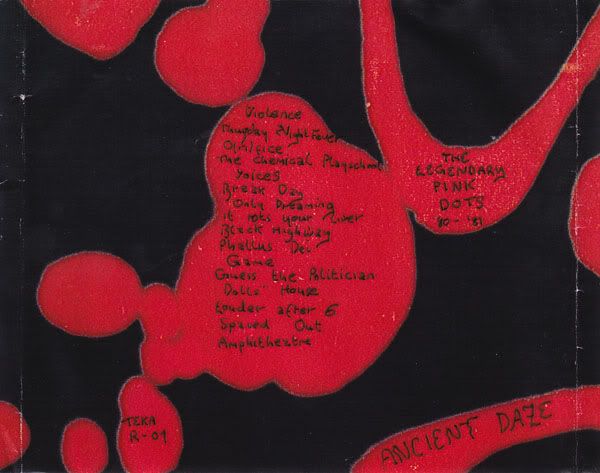
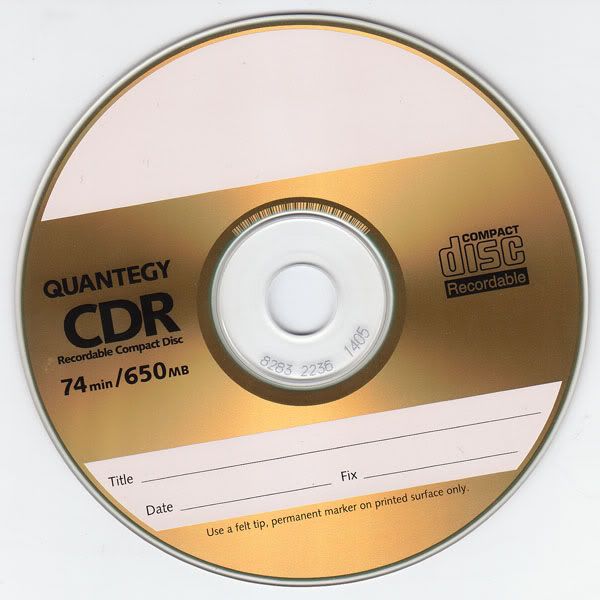
What arrived were two very informal burns with handwritten tray cards and no labels on the discs themselves, with handmade cover inserts. They looked the same on the outside, but one copy was tracked differently than the other; obviously in 1997 CD burning was still a tricky devil. I think I kept the one that most closely followed the printed tracklist, though I think both were indexed weirdly at points. I have scanned this release for you here.
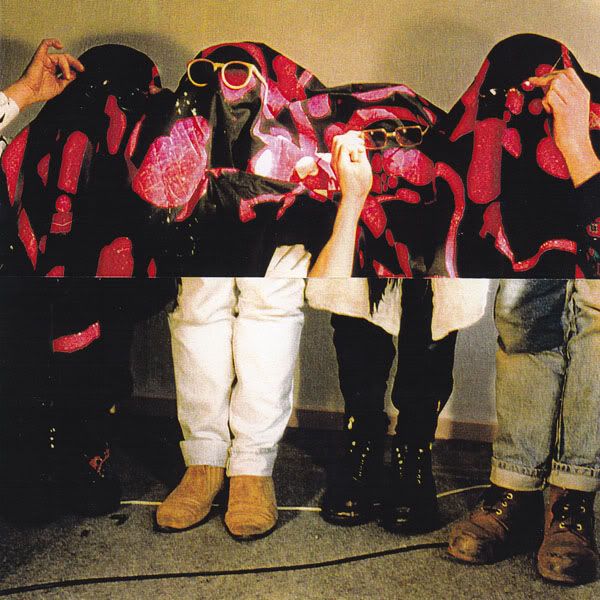
1997 CDr front cover (above), tray card and disc (below)
Now before I begin describing this music, let me first explain how influential I think this band has been. Indie rock of all shapes and sizes owes something to them. Their DIY ethic for their first several years of existence, releasing homemade cassette releases with handmade sleeves containing crude electronic pop music, is the stuff of legend. There are new genres built around artists like this, and new names from new generations of kids to describe it. Bands like the Mountain Goats and Ariel Pink's Haunted Graffiti started out this same way. And that doesn't even touch upon the band stylistically, who were arguably the first ever to combine the experimental techniques of Krautrock, particularly of the Neu! and Faust varieties, with slightly cloying pop music manufactured primarily on keyboards and synthesizers and the psychedelic swashes and drones created by Pink Floyd. The Dots basically made heady, progressive, psychedelic synthpop. Who else did this in 1981? Their music began like Dave Gilmour performing on a Depeche Mode record produced by Conny Plank. And by sheer circumstance alone, they were eventually assimilated into the late '80s gothic/industrial club scene but they never really belonged there. Their weird mutant electro-psychedelia predated the Flaming Lips, and neither Animal Collective nor MGMT could exist without them.
The fun thing about listening to Ancient Daze now is that I can imagine this is the first time I've ever heard this music, which must have sounded just absolutely batshit weird, like futuristic sci-fi Doctor Who music interspersed with sing-song and genuine desire to play actual music. It isn't high brow or avant garde in the serious sense, and yet is uncompromisingly uncommercial in its naivete and exuberance. Most importantly, it wasn't digitally edited. Every sound appears where it does because somebody grafted two tapes together, or in the case of "Thursday Night Fever" perhaps the song on the other side of the tape bled through while remastering and the band decided to leave it there. Whatever the case, it is clear from one listening that the band were already pioneers in the field of using cassettes for home recording.
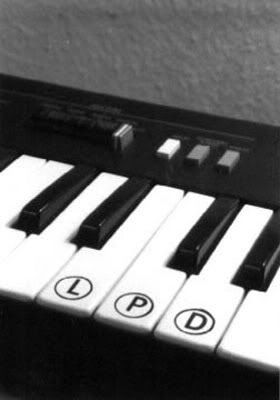 [An aside for those of you obsessing over discography details: Ancient Daze begins with the entirety of Side B of Only Dreaming, minus one song, and then continues with Side A, minus four others. Four additional tracks from the era were added to the end of Ancient Daze's first incarnation in 1997, and the album gained three more when it was remastered and professionally released on standard CD by Beta-lactam Ring Records in 2006. Of the songs from Only Dreaming left off this release, one of each appears on the three archive compilations released on CD in 1996/97 and two have only been released in alternate versions. These songs will undoubtedly be called out in the entries for these other compilations and linked back to here, when I get to them, if I get to them.]
The first song, "Violence" (aka "Another Kind of Violence") is an unsophisticated dirge, and an odd way to start. The songwriting here is so bad that the vocals follow the melody line of the bass synth tones exactly, but this quality is almost unnoticeable when matched with the slow tempo, which just gives the piece a doomy mood. The beat is syncopated to roll along like Iggy Pop's "Nightclubbing" and throughout the song is an onslaught of dubby effects. Bandleader and vocalist Edward Ka-Spel's way with lyrics, which hasn't changed in 30 years, is already perfectly in place. He has a way of pacing his delivery so that rhymes fall at odd intervals, allowing some lines to run longer than others yet the words never sound like doggerel. Here's an example: "Think I'll bip round to the bird's house 'cos I've heard that her mum's away. I'll raid the neighbor's garden, present her with a nice bouquet. She'll be so pleased, we'll go upstairs, and up and down on the eiderdown." It's all sort of juvenile, but has a natural British whimsy to it. Ka-Spel is a lyricist from the Lewis Carroll school, which has always worked for me because I have always held both Alice books in the highest regard.
"Thursday Night Fever" follows, and though it doesn't pick up the pace much, the dubs and edits throughout are disorienting. This one is possibly the first psychological Dots song, and it conveys a man's jealous obsession with his lover to the point of stalking in a semi-ironic way that is alternately amusing and scary. When Ka-Spel shrieks in a ridiculously high voice, "You're my girl, I OWN YOU!", you can't help but wonder who he was dating at the time. (This track would evolve spectacularly over the next few years, but I'll get to that later.) Next up is "O(ri)fice," one of the most amateurish songs imaginable and yet its innocence is its charm. There are no overt audio tricks here, just a cute song about the fantasies of an office staff who all want to get away from the doldrums, accompanied by Casio chords. But it's the mind-bending pulses of the following instrumental track, "The Chemical Playschool," which really set this band apart from the beginning, as it showcases the work of main synthesist Phil Knight (aka Phil Harmonix aka The Silverman). It sounds alternately like electrical noise and blood streaming through veins.
"Voices" is the quintessential track here, and features a full band performance, with synth, drum machine, guitar, voice, and all sorts of effects. It is still rudimentary and strange (and contains a lyric about "decaying manpiles") but it is fully realized and does not sound like an experiment. "Break Day," on the other hand, is straight-up synth pop, but it purposely breaks melodic formula whenever it can. It demonstrates sophistication of the pop format for the first time on the release. Two more tracks of beeping/pulsing noise follow, and if you're not paying attention, they become undiscernible. "Only Dreaming" is a minute long, and makes little impression, but "It Rots Your Liver" features Ka-Spel screaming inaudibly in the background (save for "Why? WHY?") and, based on the title, one or more members of the band may have been quite drunk at this point. This track in many ways does conjure up the abrasive sound of Throbbing Gristle and Cabaret Voltaire, pioneering acts who were both already quite active at this point.
"Black Highway" is second only to "Voices" in its fully developed feel. The rhythms and sounds all build into something catchy, perhaps the best the Dots could do to create a driving song this early on. The lyrics steal from all sorts of sources, many of them classic '50s rock-and-roll songs from the likes of Jerry Lewis and Little Richard. Cleverly, this creates the illusion that perhaps these songs are playing on the AM radio in the car. "Phallus Dei" and "Guess the Politician" are more examples of Casio-pop recorded with soft-rock presets. The former offers a co-vocal by early bandmember April Iliffe, whose voice sounds typically young and fresh, but also like a folky leftover from the late '60s. The latter includes Ka-Spel singing, "I hate Britain!" which is especially significant because in a few years time he would leave it permanently. ("Game" is another bleepy fragment that only runs about 50 seconds.) All in all, the music of the entire record sounds like an extension of late '60s values dressed up in the DIY punk ethic married with the new technology of the time.
It was not my intention to write a sentence about every song, especially in chronological order, as this kind of review (on Amazon, iTunes, etc.) is always my least favorite to read as they often sound like no consideration was given to the work as a whole. The bottom line is that these pieces all sound very similar to one another, despite the tension created between melodicism and abrasive experimentalism. The Legendary Pink Dots would benefit as they eventually began to work with more elaborate recording equipment and put out market-oriented records, but these early songs do portray a young band playing furiously and uniquely with the tools they have at their disposal.
The final stretch of tracks, three of which did not appear on Only Dreaming but were available on another cassette at the time, tend to showcase the rougher edges of the band's production ability. Both "Dolls' House" and "Louder After 6" are smothered in hyper electronic keyboard noises (which translates into unbearable chirping sounds in the latter, burying any detectable melody). Fortunately, these songs would not languish long in these particular arrangements. "Amphitheatre" benefits by pulling back the instrumental histrionics a bit, and hints at things to come. "Spaced Out" is an instrumental collage of rhythm and white noise dug out of the archives in 1997. The three previously unreleased tracks added in 2006 are hissy rehearsals ranging from piano ballads to industrial jazz; only one ("Odd") contains a Ka-Spel vocal, but it is hard to follow.
The 2006 edition of Ancient Daze can be purchased (or merely listened to) on the Bandcamp site, here.
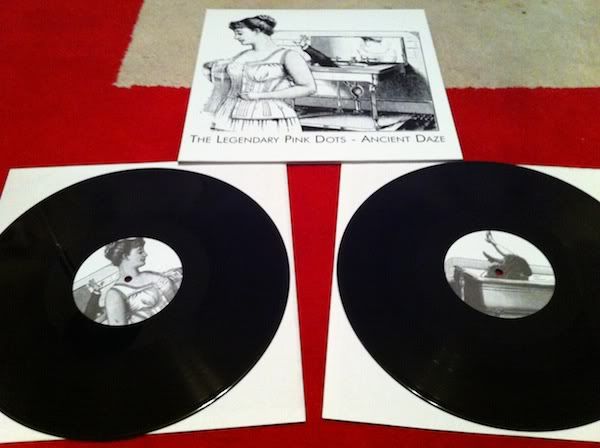
A sturdy, limited edition vinyl version was released in 2007 by Beta-lactam Ring. The copies are numbered; I have #198 of 200.
The five songs listed below appeared on the original Only Dreaming cassette but do not appear on this release:
"Before the End" and "Frosty" also appear on the double-LP Chemical Playschool Edition 2.


3 comments:
Why do we feel so much?
Why us, mirror soul
I appreciated reading your perspective on these old songs that are so special to me. It makes me happy knowing they meant something to someone else.
Post a Comment